An ice cube, a puddle, and invisible water vapor look different, but all contain water molecules. Investigate how particle arrangement, motion, and energy explain these changes.
Choose how you learn: read the lesson or watch the video, then take the five-question quiz. You can also use both.
Pause or replay whenever you like. The complete written lesson is below.
01 / MATTER AND PARTICLES
What is matter made of?
Matter has mass and occupies space. Air counts as matter even though you cannot usually see it. Matter is made of tiny particles, including atoms and molecules.
An atom is the smallest unit of an element that retains that element’s chemical identity. A molecule contains atoms bonded together. One water molecule has two hydrogen atoms and one oxygen atom: H₂O. Find H and O in the periodic table, then return to the lesson.
Melting changes a solid into a liquid. Energy entering ice lets its molecules leave their fixed arrangement and move past one another. Freezing changes a liquid into a solid as energy leaves and a stable arrangement forms.
Discover: does ice stop moving?
No. The water molecules in ice vibrate. Melting allows them to move past one another.
Evaporation and boiling
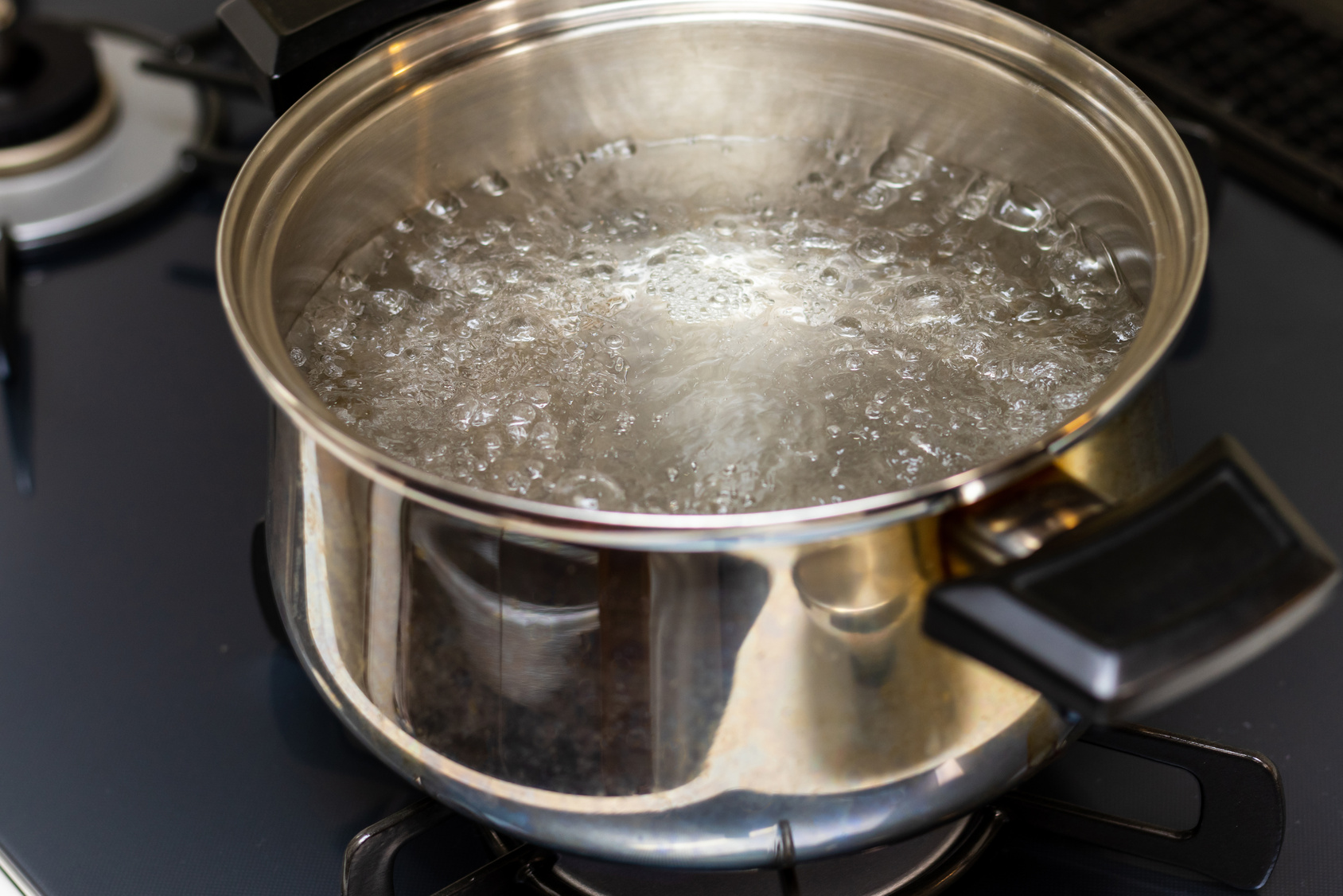
Both change liquid into gas. Evaporation happens at the surface and can occur below the boiling point. Boiling produces vapor bubbles throughout the liquid. A drying puddle does not need to boil.
Discover: can a puddle evaporate on a cool day?
Yes. Evaporation happens at the surface below the boiling point, too.
Condensation
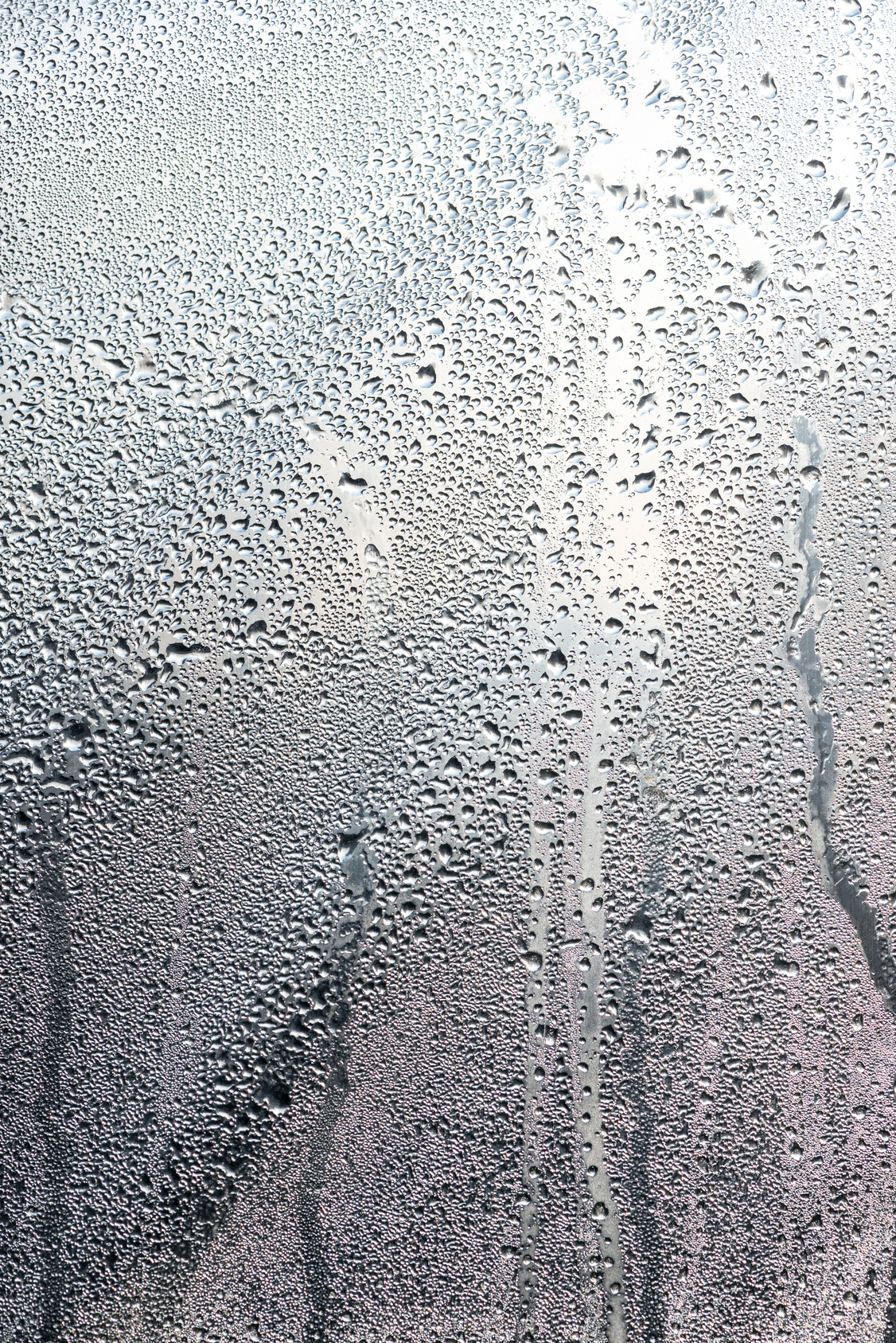
Condensation changes gas into liquid. Water vapor in the air can condense on a cold surface, forming droplets. The water on the outside of a cold glass comes from the surrounding air.
Discover: where do the droplets come from?
Water vapor in the air condenses on the cold glass. Liquid water has not passed through the glass.
A physical change
Ice melting is a physical change: water remains H₂O. The bonds joining hydrogen and oxygen within each molecule do not break during ordinary melting or boiling.
Discover: is melted ice still H₂O?
Yes. Its state changes, but the atoms within each water molecule remain bonded.
Kinetic energy is energy of motion. Temperature is related to particles’ average kinetic energy. Within a single state, adding energy usually raises the temperature and increases average particle motion. Cooling usually does the reverse.
Heat is energy transferred because of a temperature difference, from a warmer object toward a cooler one. Heat and temperature are different quantities.
At about one atmosphere of pressure, pure water melts near 0 °C and boils near 100 °C. These are not universal temperatures for all substances. Pressure affects boiling point: lower surrounding pressure allows water to boil at a lower temperature.
A tiny constituent of matter; in this lesson, an atom or molecule.
Molecule
A group of atoms bonded together.
Solid
A state with a definite shape and volume; its particles vibrate near fixed positions.
Liquid
A state with a definite volume that takes the shape of its container.
Gas
A state that expands to fill its container; its particles are widely separated.
Melting
A change from solid to liquid.
Freezing
A change from liquid to solid.
Evaporation
A change from liquid to gas at the surface, which can occur below the boiling point.
Boiling
A change from liquid to gas with vapor bubbles forming throughout the liquid.
Condensation
A change from gas to liquid.
Physical change
A change that does not make a new chemical substance.
Kinetic energy
Energy associated with motion.
Plateau
A flat part of a graph; on this heating curve it shows a state change at nearly constant temperature.
CHECK YOUR UNDERSTANDING
Ready for the quiz?
Five questions · Grade 7 · No timer. Read the lesson or watch the video, then select one answer per question. Your results download as a PDF for your homeschool portfolio.